 Mental Bound
Solarpunk Journal — AI-augmented personal publishing
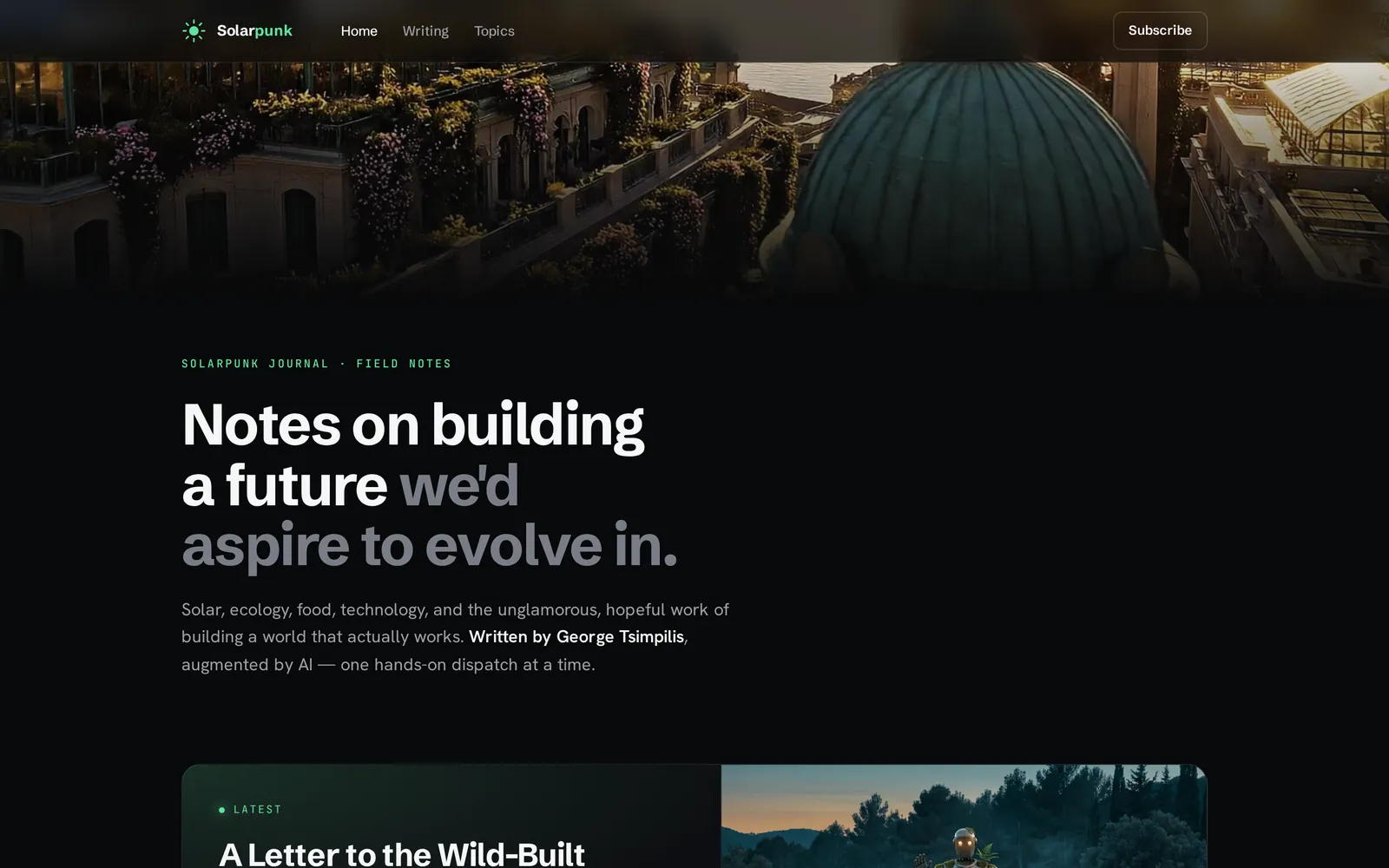
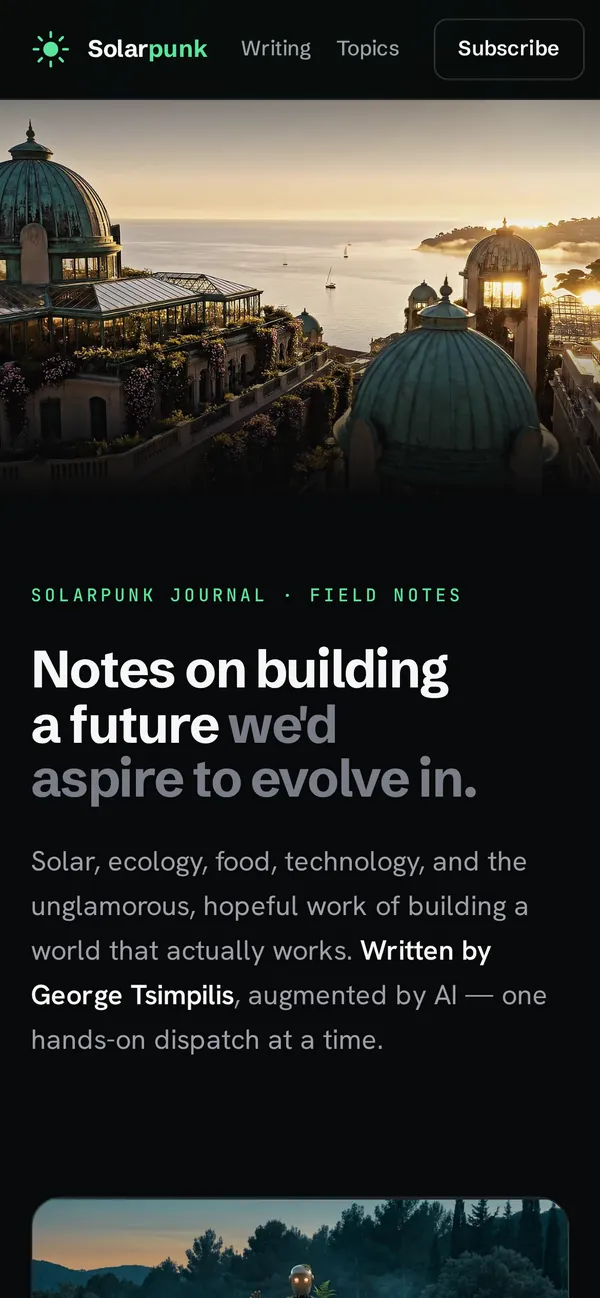
Field notes on solar, ecology, food and technology, written by Mental Bound's founder, George Tsimpilis, and augmented by AI. We built the journal as a static Astro site: Markdown goes in, plain HTML and an RSS feed come out, with no database and no UI framework.
Visit websitesolarpunk.gr
At a glance
- UI frameworks
- 0
- Static HTML, hand-written CSS and a few lines of inline script
- AI-generated scenes
- 8
- The homepage film, dawn to night. It plays once and rests on the night frame
- preset topics
- 7
- A topic page appears as soon as a post is filed under it
- subscription
- RSS
- An open feed, with no email list and no trackers
What we built
Writing and reading
solarpunk.gr- Posts are Markdown files. A schema checks each post's frontmatter at build time, and a bad field stops the build.
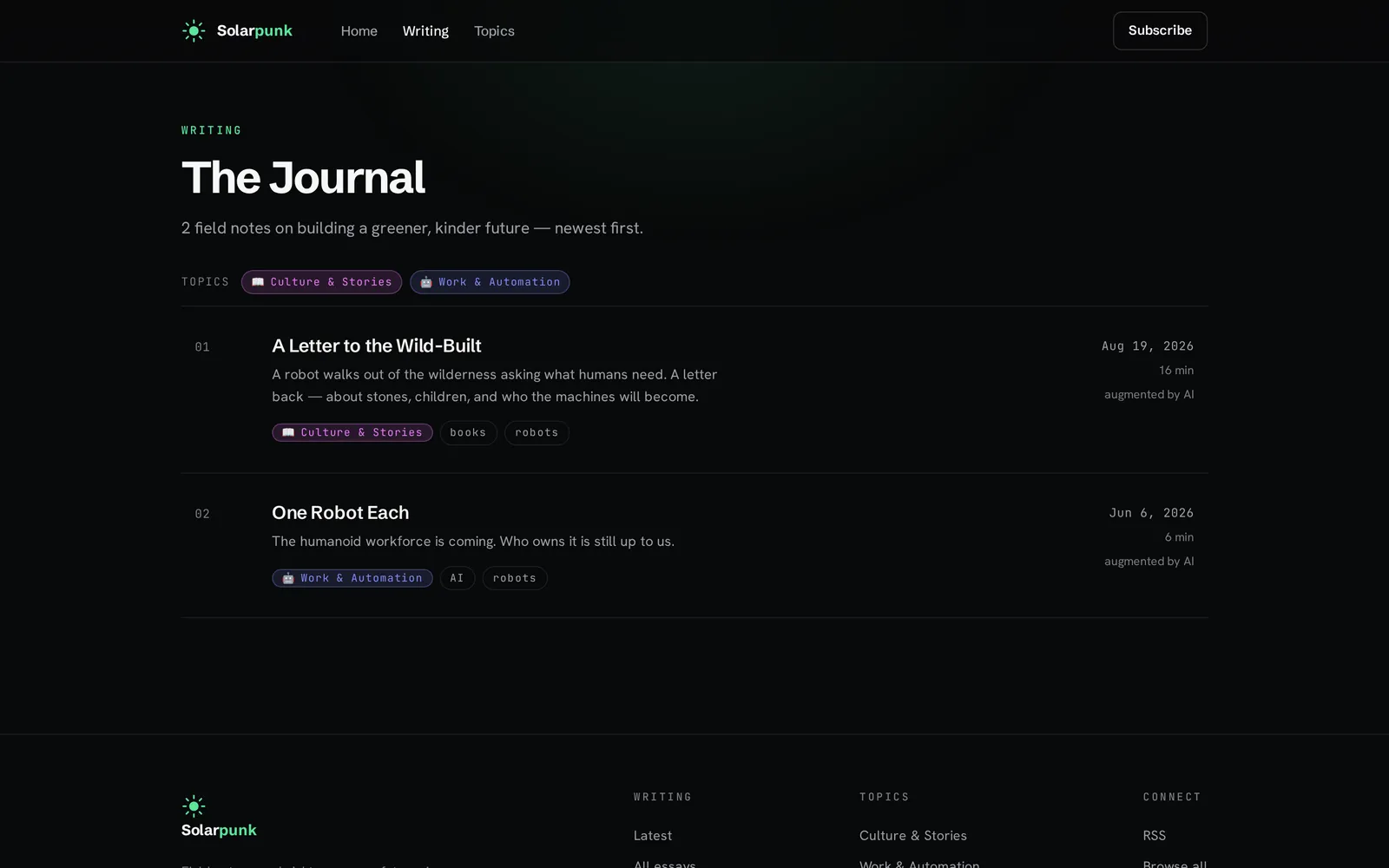
- One category per post. Topic pages and their counts come from the posts, so there is no list to keep in sync.
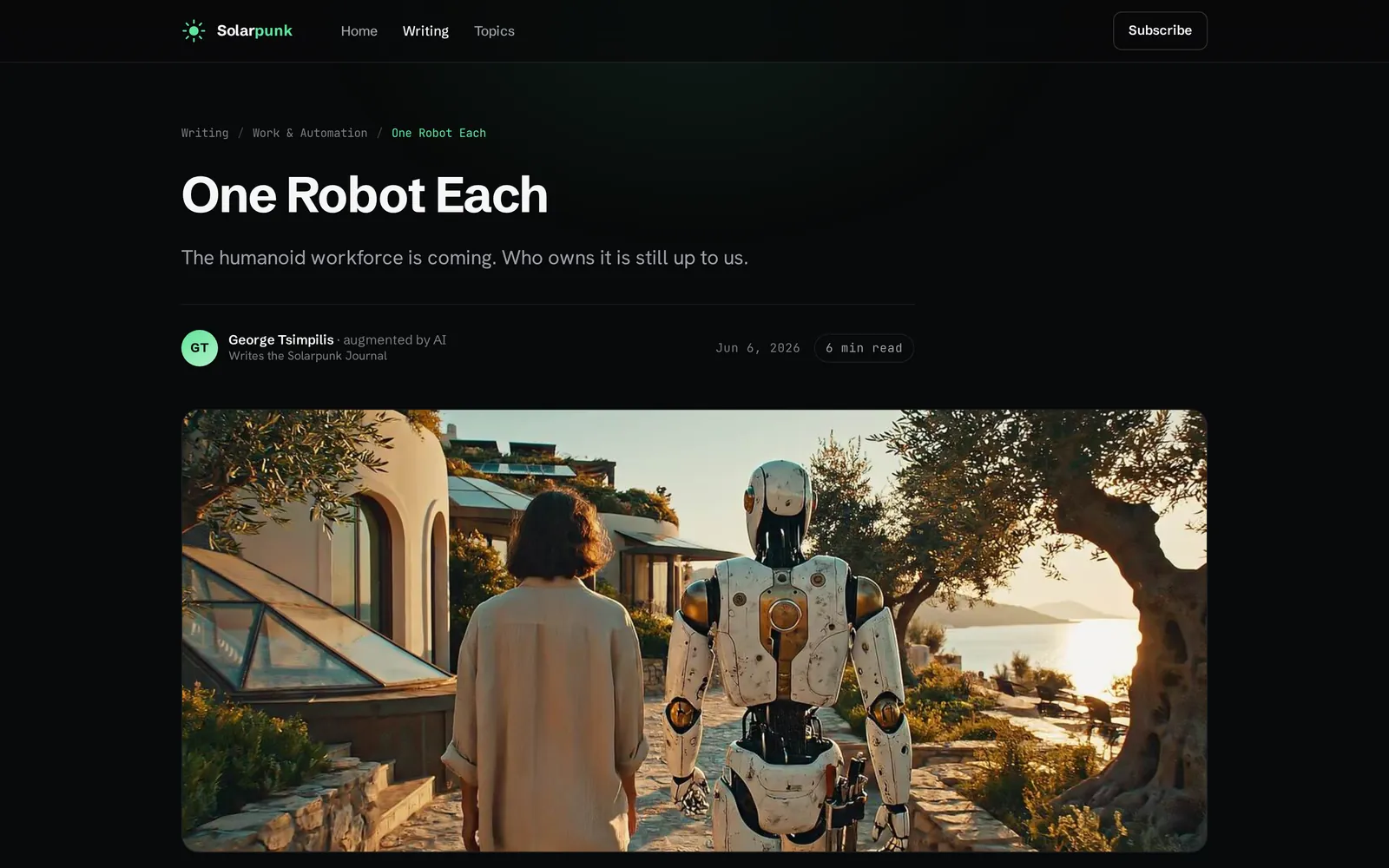
- A reading view with a progress bar, an on-this-page contents list, copy-link and share-to-X, an author card and related posts.
- Every byline and every post listing names the author with the qualifier “augmented by AI”.
- A homepage film of eight AI-generated scenes, dawn to night. It plays once, without sound, and stays still for readers who ask for reduced motion.
- Reading time worked out from each post; drafts never reach production.
Publishing and discovery
- An RSS feed with author and language. Subscribing needs no account and no email address.
- Canonical URLs, a sitemap, and Open Graph and X cards on every page, with a default card when a post has no image.
- Structured data: BlogPosting and breadcrumbs on posts, WebSite on the homepage.
- An llms.txt index generated at build time, and a robots.txt that points to it.
- Self-hosted fonts, a same-origin content security policy and strict security headers.
- A skip link and semantic landmarks; muted text lifted above the WCAG contrast minimum.
From draft to reader
Markdown
Write
The author writes the post in Markdown, with AI as a writing aid. The byline says so.
Astro
Build
A schema checks the frontmatter, reading time is worked out, and the post joins its topic page.
Vercel
Deploy
A push to main publishes the static pages, the RSS feed, the sitemap and llms.txt.
Site, feed, crawlers
Read
Readers find it on the site or in their feed reader; search engines and AI crawlers read the sitemap and llms.txt.
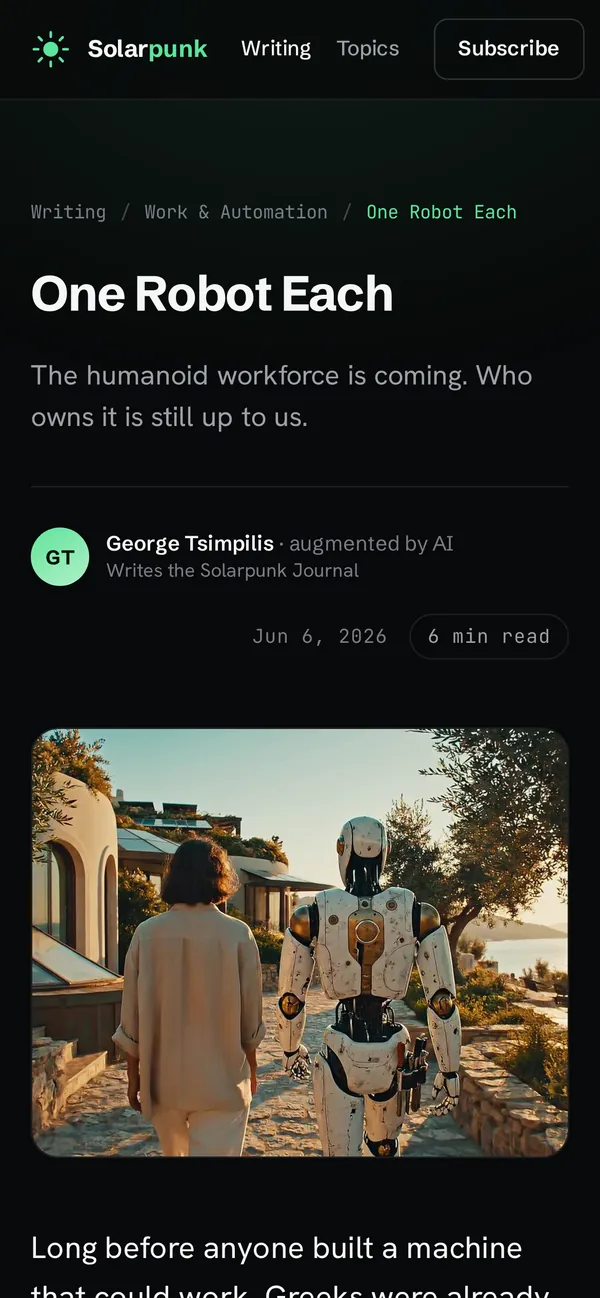
Screens
solarpunk.gr/blog/one-robot-each/
solarpunk.gr/blog/

Built with
- Astro
- TypeScript
- Markdown
- CSS
- Vercel
Ready to get started?
Tell us about your goals — we'll propose milestones within 48 hours.