Mental Bound
The Age of the Digital Worker Has Arrived: What Perplexity Computer Tells Us About the Future of IT and Agentic Engineering
Perplexity Computer isn't just another AI product—it's a signal that the age of autonomous digital workers is here. Here's what IT leaders and engineers need to know.
On February 25, 2026, in the middle of one of the most turbulent weeks in tech policy history, Perplexity AI quietly dropped what might be the most consequential product launch of the year. They called it Perplexity Computer. Not a laptop, not a browser, not another chatbot — but something that doesn't quite have a category yet. And that's exactly the point.
Beyond the Chatbot: What Perplexity Computer Actually Is
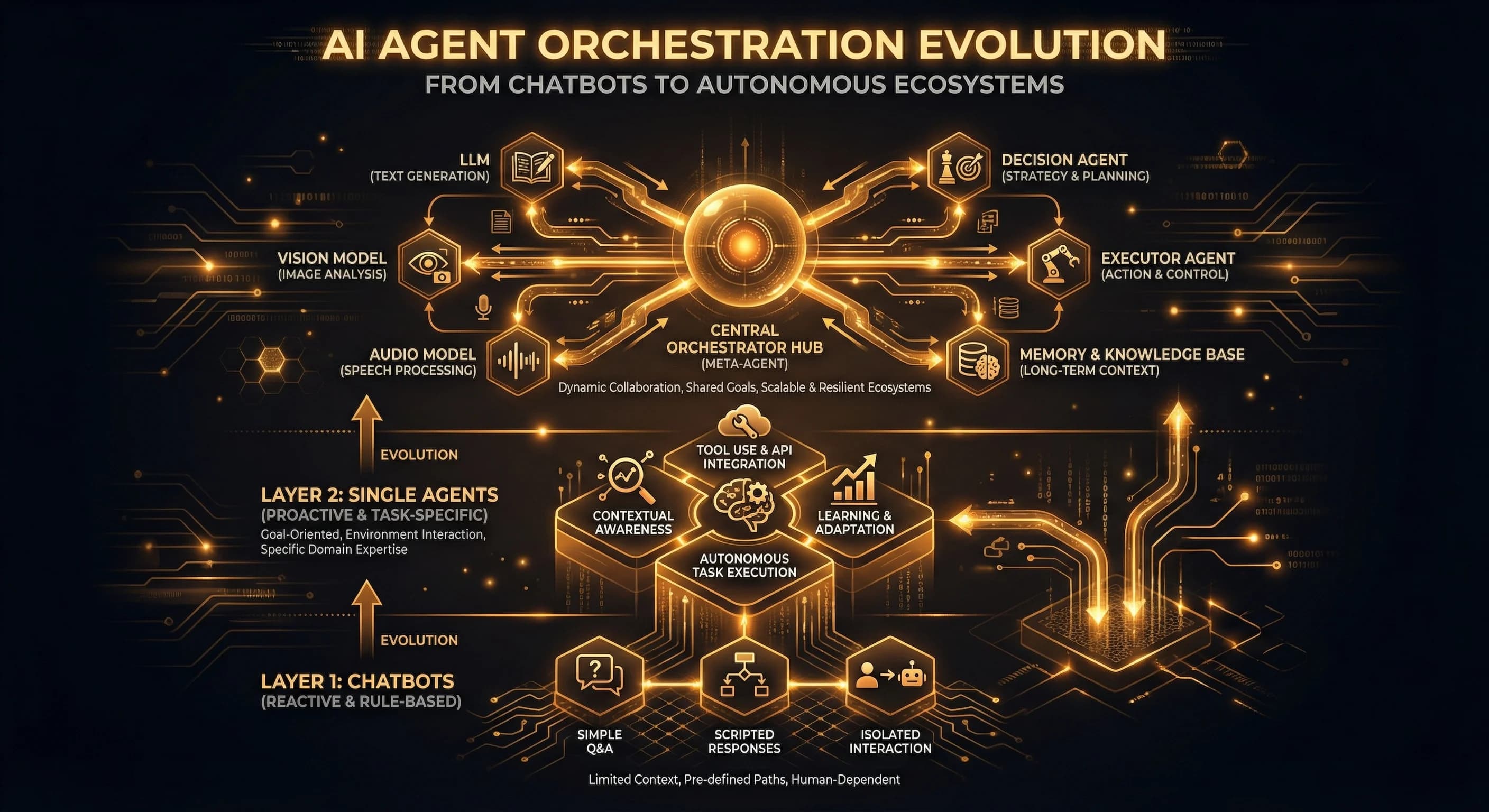
Let's get one thing straight: despite its name, Perplexity Computer is not hardware. It's a cloud-based system that orchestrates 19 different frontier AI models into a single, unified digital worker. You give it an objective — build a website, produce a research report, generate a dataset, deploy an app — and it breaks that objective into tasks, delegates them to specialized sub-agents, and delivers finished work.
Not suggestions. Not drafts. Finished outcomes.
At the core sits Claude Opus 4.6 as the primary reasoning engine. Around it, a constellation of purpose-built models handles specific domains: Gemini for deep research and sub-agent creation, Nano Banana for image generation, Veo 3.1 for video, Grok for quick lightweight tasks, and ChatGPT 5.2 for long-context recall and broad search.
The orchestration layer — what Perplexity calls its "model-agnostic harness" — dynamically selects the best model for each subtask. Users can also override these choices and manually assign models where they want more control over quality or token spend.
Each task executes inside an isolated compute environment with access to a real filesystem, a real browser, and over 400 integrated tools. The work is asynchronous. You can launch it and walk away. You can run dozens of Perplexity Computers in parallel. When the system encounters a problem it can't solve, it spawns new sub-agents to research solutions, find API keys, or write custom code — and only checks in with you when it truly needs human input.
This isn't a chatbot that answers questions. This is a system that does the work.
The Paradigm Shift Nobody Saw Coming This Fast
To appreciate what's happening here, you need to zoom out. The AI products we've used for the past two years have mostly fallen into two categories: chat interfaces that give you answers, and agents that can perform individual tasks. Perplexity Computer introduces a third: a workflow engine that creates, coordinates, and executes entire multi-step projects that can run for hours — or even months.
Consider the timeline. Perplexity spent six months building Comet, its AI-powered browser. Computer? Two months. Built largely on Claude Code by Perplexity's engineering team, with the product eventually helping to finish itself — Computer animated its own logo, modified its own codebase, and contributed to its own go-to-market strategy. The product wasn't even in the roadmap until December 2025, when breakthroughs in frontier model capabilities made it suddenly feasible.
As Perplexity's Chief Business Officer Dmitry Shevelenko told journalists: "Six months from now, I'm going to have a top-three priority that today I don't know about."
That's not corporate hyperbole. That's the honest reality of building products in a field where the underlying capabilities are advancing faster than anyone's product planning cycles.
What This Means for the Information Technology World
If you work in IT — whether you're a CIO, a systems architect, a developer, or a managed services provider — Perplexity Computer is a signal flare. Here's what it's telling us:
1. The Model Is No Longer the Product
For the past three years, the AI industry has been obsessed with model benchmarks. Who has the best reasoning? The fastest inference? The largest context window?
Perplexity Computer renders this conversation secondary.
The product isn't any single model — it's the orchestration layer on top of all of them. Perplexity treats models the way an operating system treats hardware drivers: interchangeable components that serve the system's needs. When a better model appears, it gets swapped in. The user never notices — and frankly, shouldn't have to.
This has profound implications for the competitive landscape. If models become commoditized components, then the value migrates upward to whoever builds the best orchestration, the best task decomposition, the best quality assurance layer. It's the same shift that happened when cloud computing commoditized servers: nobody cares about your rack anymore; they care about what you build on top of it.
2. The "Build vs. Buy" Decision Just Got Existential
Deloitte, Gartner, IDC, and McKinsey have all released 2026 forecasts pointing to the same conclusion: the organizations that thrive in the agentic era will be those that redesign their workflows from the ground up rather than bolting AI agents onto existing processes.
Perplexity Computer makes this tension visceral. Why would an enterprise spend months building a proprietary multi-agent system when a $200/month subscription gives individual knowledge workers the ability to spin up autonomous digital workers on demand?
The counter-argument — control, security, customization — is real, but the gap between what a consumer product can do and what a custom enterprise deployment can do is shrinking at an alarming rate.
For IT leaders, the strategic question is no longer "should we adopt AI agents?" It's "where on the autonomy spectrum do we deploy them, and who builds the orchestration layer — us, or someone like Perplexity?"
3. IT Operations Are About to Be Rewritten
Gartner predicts that 40% of enterprise applications will embed AI agents by the end of 2026, up from less than 5% in 2025. That's an 800% increase in a single year. The autonomous AI agent market is projected to reach $8.5 billion by year-end and could climb to $52 billion by 2030.
These aren't incremental improvements. These are architectural shifts.
When agents can interact with software the way humans do — through actual browsers, actual file systems, actual APIs — the entire concept of "IT infrastructure" gets redefined. Monitoring, security, access control, audit trails — all of these must now account for non-human actors that operate 24/7, spawn sub-processes autonomously, and make decisions without real-time oversight.
What This Means for Agentic Engineering
If "Perplexity Computer" sounds like the kind of product that should terrify software engineers, that's because you're thinking about it wrong. It should excite them — but it demands a fundamental rethinking of what engineering work looks like.
The Rise of the "Agent Architect"
CIO Magazine's recent analysis put it perfectly: the engineer of 2026 will spend less time writing foundational code and more time orchestrating a dynamic portfolio of AI agents, reusable components, and external services. The core skill becomes systems thinking, not syntax.
This is already playing out. The dominant engineering workflow is shifting to what leading teams call "delegate, review, and own." You define the objective. You specify the constraints and guardrails. The agents execute. You validate the output. Your value lies in architectural judgment — knowing how to decompose problems, which models to assign, when to inject human oversight, and how to evaluate quality.
Perplexity Computer embodies this pattern. But it also previews the next challenge: when the system can spawn its own sub-agents to solve unexpected problems, how do you maintain visibility? When the orchestration layer routes your code generation to one model and your security review to another, how do you ensure consistency?
This is where the new discipline of "agentic engineering" lives.
Multi-Agent Orchestration Is the New Microservices
The parallel is striking and deliberate. Just as monolithic applications gave way to distributed microservice architectures in the 2010s, monolithic AI deployments are now giving way to orchestrated multi-agent systems.
Gartner reported a 1,445% surge in multi-agent system inquiries between Q1 2024 and Q2 2025. This isn't a trend. It's a phase transition.
The engineering implications mirror the microservices era: you need standardized communication protocols (MCP and A2A are emerging here), cost optimization strategies (a "Plan-and-Execute" pattern where a powerful model plans and cheaper models execute can reduce costs by 90%), observability tooling, and governance frameworks.
Companies like ServiceNow and UiPath are already building orchestration platforms. The protocol layer — who defines how agents talk to each other — may determine the next decade of the industry.
The Human-in-the-Loop Spectrum
Perhaps the most critical dimension is autonomy. Deloitte's framework describes three modes:
- Human in the loop — manual approval at every step
- Human on the loop — monitoring with intervention authority
- Human out of the loop — full autonomy with post-hoc review
Most enterprises in 2026 will operate in the first two modes, but the pressure to move toward the third will be relentless.
Perplexity Computer defaults to a human-on-the-loop model: it executes autonomously but can check in when stuck. This is the pragmatic sweet spot for now. But the economic incentives — running dozens of Computers in parallel, 24/7, without human bottlenecks — point clearly toward greater autonomy over time.
The organizations that build robust governance and quality assurance frameworks now will be the ones that can safely increase autonomy later.
The Elephant in the Room: Security and Trust
Cloud-based agent systems like Perplexity Computer sidestep some of the security concerns plaguing tools like OpenClaw, which require local system access and put configuration responsibility on the user. Running in isolated cloud environments is a meaningful safety improvement.
But "safer than the alternative" isn't the same as "safe."
When an AI system has access to real filesystems, real browsers, and 400+ app integrations — and can autonomously create sub-agents — the attack surface is enormous. Misconfigured agents could leak sensitive data. Poorly scoped permissions could enable unauthorized actions. The security research community has already flagged that agents with deep system access can introduce vulnerabilities including unauthorized command execution.
For enterprise adoption, this means the observability and governance layer isn't a nice-to-have — it's the foundation. Agent telemetry dashboards, orchestration visualization, outcome tracing, and audit logs must be first-class features, not afterthoughts.
The Competitive Landscape: Who Wins?
Perplexity Computer doesn't exist in a vacuum. It competes directly with OpenClaw (open-source, local-first, developer-oriented), Claude Cowork (Anthropic's desktop automation tool), and OpenAI's Operator. Each makes different tradeoffs:
-
Perplexity Computer bets on multi-model orchestration and cloud-based convenience. Its strength is unifying the best capabilities of every frontier model in one system. Its risk is dependency on third-party model providers.
-
OpenClaw bets on open-source flexibility and local control. Its strength is customization and community-driven development. Its risk is security complexity and the burden it places on users to configure and maintain the system.
-
Claude Cowork bets on deep integration with desktop workflows and Anthropic's own model ecosystem. Its strength is a unified, trust-oriented approach. Its risk is navigating an increasingly hostile political environment for companies that maintain ethical guardrails.
The likely outcome? All three paradigms coexist, serving different segments. The enterprise market will fragment between those who want managed solutions (Perplexity), those who want open and customizable systems (OpenClaw), and those who prioritize trust and safety (Anthropic).
The winner in each segment will be the one that best solves the orchestration, governance, and reliability challenges.
Looking Forward: The Next 12 Months
If the trajectory holds — and every indicator suggests it will accelerate — here's what to expect by early 2027:
Agent-native job roles will proliferate. "Agent Manager," "Workflow Architect," and "AI Operations Engineer" will appear on LinkedIn with increasing frequency. The skill premium will shift from "can write code" to "can design and govern autonomous systems."
Token economics will become a first-class business concern. As agent workloads scale, token consumption will rival cloud compute as an operational cost line item. FinOps for AI agents will emerge as a discipline.
Regulatory frameworks will lag but accelerate. The EU AI Act is already setting requirements. Expect the US to face increasing pressure to define clearer rules around autonomous AI systems in both military and civilian contexts.
The agentic operating system will take shape. Standardized orchestration, safety compliance, and resource governance across agent "swarms" will become the infrastructure layer that everyone builds on — much like cloud platforms defined the 2010s.
The Bottom Line
Perplexity Computer isn't a product. It's a proof point.
It demonstrates that the technology to build truly autonomous digital workers — systems that reason, plan, delegate, build, and deliver — already exists. The remaining challenges are organizational, not technological: governance, security, workforce adaptation, and the hard work of redesigning processes around an entirely new kind of capability.
The personal computer gave individuals the power to create. The internet gave them the power to connect. The smartphone gave them the power to compute anywhere. Perplexity Computer — and the generation of agentic systems it represents — gives individuals the power to delegate.
For IT leaders, engineers, and anyone whose work involves information: the question is no longer whether this transformation is coming.
It's whether you'll be the one designing the workflows — or the one being replaced by them.